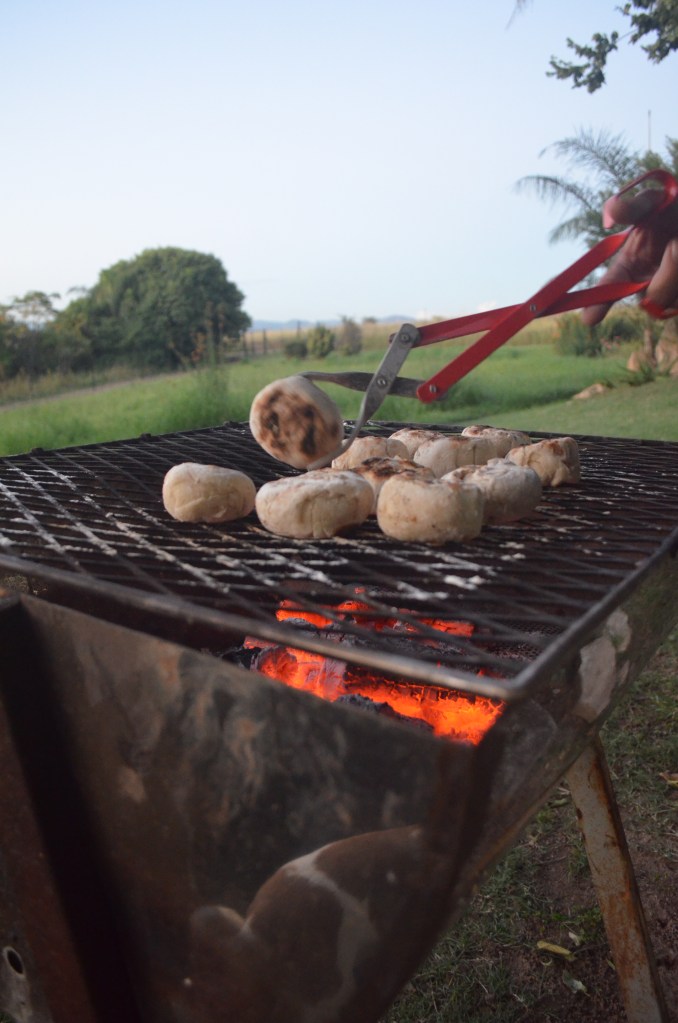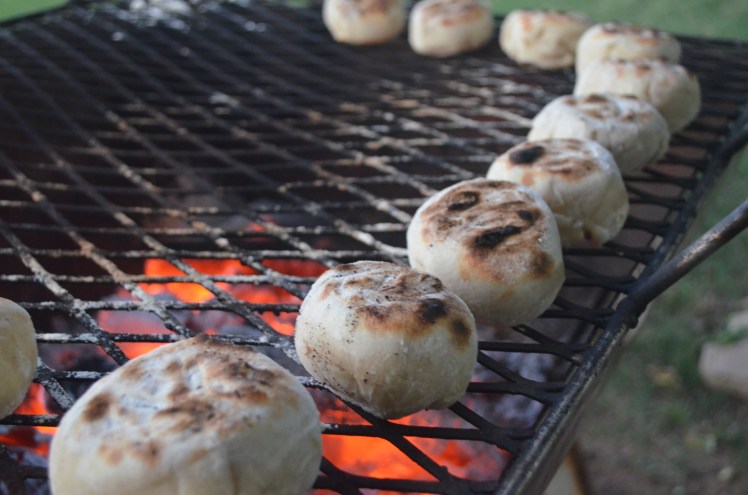
It’s hard to believe that it has been almost 20 years since I copied this Roosterkoek recipe into my own recipe book from friends who frequently visited the Greater Kruger National Park. Preparing this recipe is always a trip down memory lane. The old-style family camps in these conservation areas had a very romantic charm to them. All units (living, kitchen, bedroom and bathroom) were in separate buildings. The outside areas were swept clean with a few indigenous drought-hardy plants. I sat in the simple bush kitchen with its mosquito-screened door and copied the recipe carefully. Later that evening, we enjoyed delicious fresh Roosterkoek dripping with butter at the *boma braai area. With the nocturnal bushveld chorus of crickets and scops owls as our preferred music. Oom Albie always had a batch of Roosterkoek ready when we visited, and since then, bushveld braais and Roosterkoek became synonymous.
*A boma is a traditional African gathering place. A communal outdoor living area is fortified with a circular wall of branches/reeds/wood or other means, to create an atmospheric space where people can socialise and dine next to an open fire.
Easy Roosterkoek Recipe
For those of you who don’t know what Roosterkoek is, it is a delicious traditional South African outdoor bread which is cooked on an open fire. This recipe is a winner at any braai. Add your braai meat and salad, and the meal is complete.
And if you are camping in the bush, leftovers are great to add to your brunch with some eggs, bacon and cheese. Or pack them as padkos (an Afrikaans term for food for the road) on your morning game drive.
Once cooled, store them in an airtight container at room temperature. There are no preservatives, so they won’t keep for more than a day or two, but I would be surprised if you have any left. They normally disappear within the first morning after, if I was lucky enough to have leftovers after the braai,
I will start off with the original recipe, and below I will also explain how to make these if you use a sourdough starter.
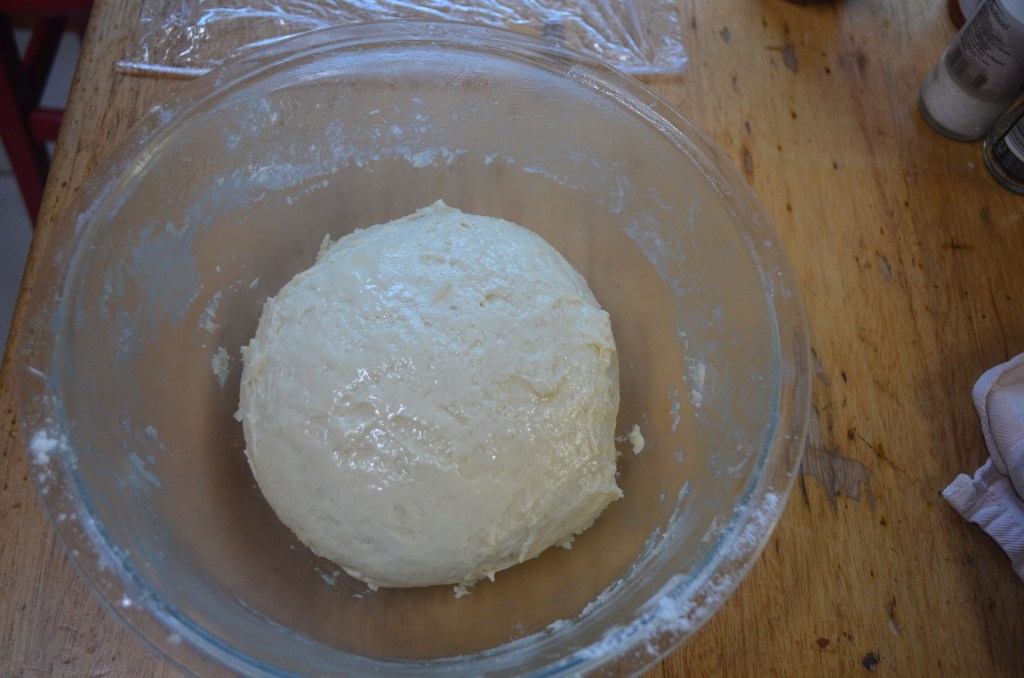
Roosterkoek Ingredients.
- 500 grams cake flour or bread flour
- 1 teaspoon of sugar
- 1/2 teaspoon of salt
- 1/2 packet of instant yeast
- 1 cup of lukewarm water
- 1 cup of soft melted butter (or as per the original recipe, mutton fat)
Method
- Mix flour, sugar, salt & instant yeast
- Add enough lukewarm water to make a firm dough
- Knead dough until soft and elastic. It mustn’t cling to your hands anymore.
- Oil your hands with the fat/butter and knead it in
- Cover with cling wrap and set aside to double
- When it has risen sufficiently, knead it down and make little balls and flatten them slightly.
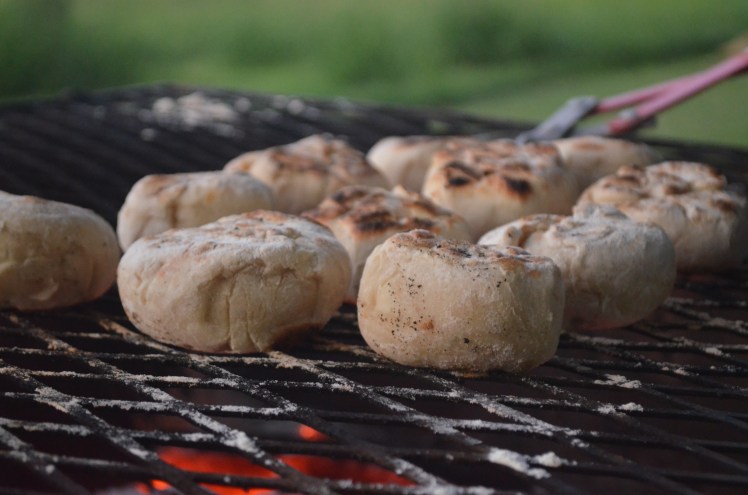
Place on a tray sprinkled with flour 1 hour before dinner or leave in the fridge until braai time. - Braai on moderately hot coals, turning frequently, until they are golden brown and sound hollow when you tap on them from the top.
- Serve hot with butter, and optionally add toppings like preserves or cheese or have one as desert with honey or golden syrup
Hints and Tips
- Double the recipe, it’s a hit, and you will want more than one.
- You can substitute the butter with oil or reduce it, but leaving it out completely is not recommended, as it softens the bread dough and keeps it softer for longer.
- Another method to incorporate the fat is to rub it into the dry ingredients in the first step, before adding the hot water.
- Rubbing the hot Roosterkoek with butter as soon as it comes of the grid will soften the crust and make them even more delicious.
Moving along to making the Roosterkoek with a sourdough starter.
Changing the recipe to a sourdough Roosterkoek is simple. If you have always wanted to start a sourdough starter have a look at my post here: How to create an easy sourdough starter from scratch.
To change your recipe to sourdough:
Start your recipe early in the morning if you want to braai lunch or dinner. It needs 4-6 hours to ferment.
Substitute the instant yeast for half a cup of active sourdough starter.
Do not add the butter, this will only happen at the end.
Add the sourdough starter to the dry ingredients and, bit by bit, add the lukewarm water. The extra moisture in the recipe might make the dough too sticky. Add a little bit of flour if necessary. Knead until elastic, cover with cling wrap and set aside to rise.
Once it has properly fermented and risen, knock it down. Add the butter to the mixture in the same way as in the original recipe. Shape the dough into balls and place them on a flour-dusted tray. Leave them for an hour to rise before cooking, or leave them in the fridge if a longer time is needed.
Let me know if you have tried this recipe in the comments, and tell me what combinations you enjoy on your Roosterkoek.
To me, this is a camping, bushveld, long weekend and holiday winner.